 Introduction
 Introduction
The Red Sea has emerged as one of the most critical geopolitical flashpoints in recent times. What initially appeared as a regional security issue has now grown into a global concern, affecting international trade, energy supplies, and geopolitical stability. Due to rising attacks on commercial vessels and increasing military presence, the Red Sea has become a symbol of how regional conflicts can quickly spill over into global consequences.
Strategic Importance of the Red Sea
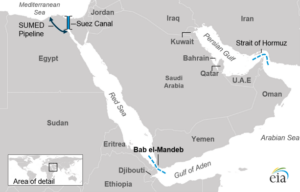
The Red Sea is one of the world’s most important maritime routes. It connects Asia, Europe, and Africa through the Suez Canal and the Bab el-Mandeb Strait. Nearly one-third of global shipping passes through this route, including oil, gas, food, and manufactured goods. Any disruption in this region directly affects global supply chains and shipping costs.
What Triggered the Current Crisis
The present crisis intensified after attacks on commercial ships in the Red Sea by the Houthi movement, based in Yemen. These attacks are linked to the broader Middle East conflict, particularly the Israel–Gaza war. In response, several global powers deployed naval forces to protect shipping lanes, further militarizing the region.
Role of Global Powers
The United States and its allies have taken an active role in securing the Red Sea by launching naval patrols and defensive operations. Meanwhile, Iran is often accused of backing the Houthis, though it officially denies direct involvement. This has increased tensions between Western powers and Iran, raising fears of a wider regional escalation.
Impact on Global Trade and Economy
The Red Sea crisis has forced many shipping companies to avoid the region and reroute vessels around the Cape of Good Hope, significantly increasing travel time and costs. As a result, fuel prices have risen, delivery times have slowed, and global inflationary pressures have increased. Developing countries are particularly affected, as higher shipping costs raise the prices of essential goods.
Security and Military Concerns
The heavy military presence in the Red Sea has increased the risk of miscalculation and accidental escalation. Naval confrontations, drone attacks, and missile interceptions have become frequent. This situation highlights how fragile global maritime security has become in an era of regional conflicts and power rivalries.
Humanitarian and Regional Impact
Countries surrounding the Red Sea, especially Yemen, are facing worsening humanitarian conditions. Ongoing instability has disrupted local economies and reduced access to food and medical supplies. The crisis has added another layer of suffering to a region already affected by years of conflict.
Future Outlook
Several outcomes are possible in the coming months. Diplomatic efforts could reduce tensions and stabilize shipping routes, or the crisis could expand into a broader regional conflict involving multiple states. Much depends on international diplomacy, regional negotiations, and the ability of global powers to manage escalation.
Conclusion
The Red Sea crisis clearly shows how interconnected today’s world has become. A conflict rooted in regional politics now affects global trade, energy security, and international relations. Understanding this crisis is essential for grasping the broader dynamics of modern geopolitics and the growing importance of maritime security.
Written by Editor: Ashmit Podder
Geopolitical Analyst